
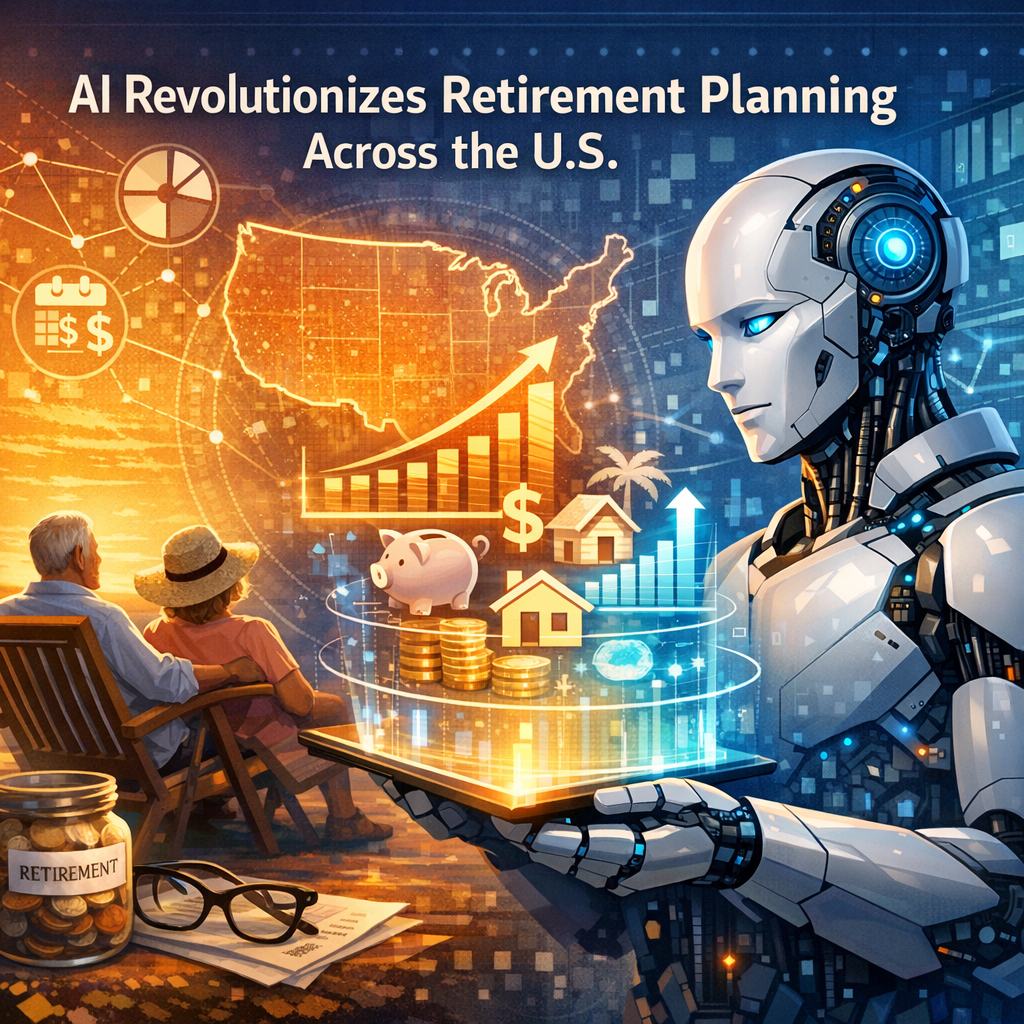
AI Revolutionizes Retirement Planning Across the U.S.
How AI Is Transforming Retirement Planning for Americans Nationwide
The traditional landscape of retirement planning is undergoing a rapid transformation thanks to the integration of artificial intelligence (AI). For Americans nationwide, this shift means more precise financial guidance, personalized investment strategies, and enhanced predictive capabilities. Let’s delve into how AI is reshaping the future of retirement planning, making it more accessible and tailored than ever before.
Optimizing Investment Strategies
Predictive Analytics in Market Trends
AI excels in analyzing vast datasets to identify patterns and predict market trends. This capability allows financial advisors and retirement planners to offer more informed advice based on predictive outcomes rather than just historical data. AI-driven tools can forecast stock performance, interest rates, and economic shifts, enabling better investment choices for retirement funds.

Risk Assessment and Management
AI algorithms also play a crucial role in assessing risk by considering various factors that affect an individual’s investment choices, such as age, income, life expectancy, and economic conditions. This comprehensive analysis helps in crafting a risk-adjusted investment strategy that aligns with personal retirement goals.
Enhancing Personalization Through Robo-Advisors
Customized Financial Planning
Robo-advisors, powered by AI, are revolutionizing the way Americans plan for retirement by providing personalized advice at a fraction of the cost of traditional financial advisors. These AI systems analyze personal financial data to suggest the best routes for savings, investments, and other financial decisions, tailor-made to individual needs and preferences.
Accessibility and Ease of Use
These AI-driven platforms are not only highly knowledgeable but also accessible 24/7, providing immediate responses and assistance. Their ease of use and lower cost make them particularly appealing to younger generations who are beginning to think about retirement.
Predicting Future Expenses and Healthcare Costs
Longevity and Healthcare Projections
AI systems are importantly used to project future healthcare needs and costs by analyzing trends in longevity and medical advancements. This feature is invaluable for retirement planning, particularly in predicting expenses related to eldercare and potential long-term healthcare needs.
Budgeting for Retirement
AI helps in creating more realistic and effective retirement budgets by analyzing current spending habits, future financial projections, and expected changes in income. These insights allow for better financial preparation, ensuring that individuals can maintain their desired lifestyle throughout retirement.
Ethical Considerations and Challenges
Data Privacy and Security
With the increasing use of AI in financial planning, data privacy and security emerge as significant concerns. Ensuring that sensitive financial information is protected requires robust security measures and transparency from AI service providers.
Bias and Fairness
Another challenge is the potential for inherent biases in AI algorithms, which could skew advice based on flawed assumptions. Continuous monitoring and updating of these systems are essential to maintain fairness and accuracy in AI-driven retirement planning.
Conclusion
The integration of AI into retirement planning offers a promising future filled with personalized strategies, improved financial management, and better preparation for the uncertainties of post-retirement life. As these technologies evolve, they promise to make retirement planning more intuitive and aligned with individual financial goals. For Americans, this means a potentially more secure and enjoyable retirement, powered by the innovative capabilities of artificial intelligence.